












What is a DANA (Cut-off Low)?
DANAs are one of Spain's most dangerous weather phenomena. Responsible for the worst floods in our history, these "cold drops" can discharge in hours what normally rains in entire months. In this guide you'll learn what they are, how they form, and why they're so devastating.
What is a DANA?
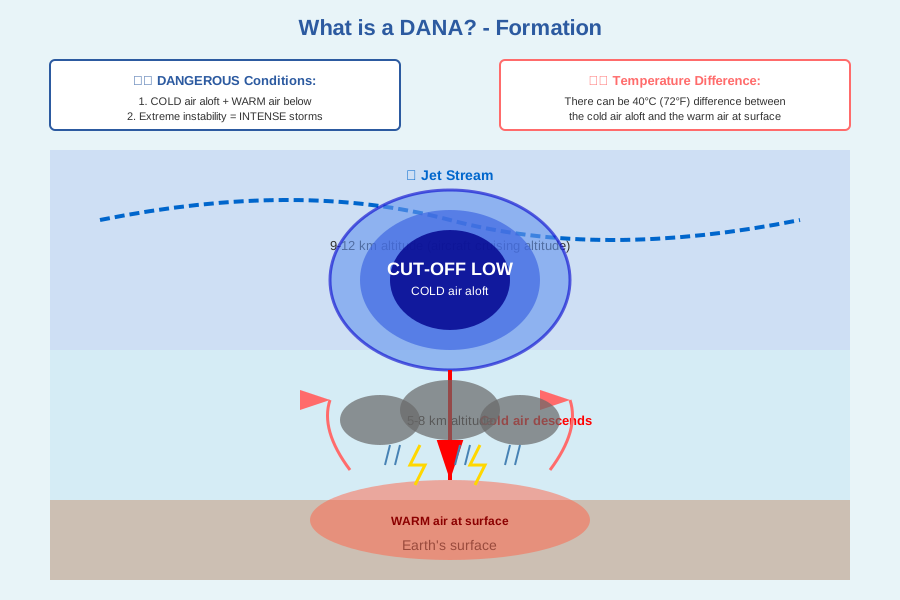
DANA stands for Isolated Depression at High Levels (Depresión Aislada en Niveles Altos in Spanish). It's a pocket of very cold air trapped in the upper layers of the atmosphere (between 5 and 9 kilometers altitude), separated from the general circulation.
How Does a DANA Form?
DANAs form when a portion of the jet stream becomes excessively wavy and ends up "trapping" a pocket of very cold polar air at lower latitudes:
- Jet stream undulation: The jet stream (which normally flows west to east) forms a very pronounced "U" shape.
- Isolation: The bottom of the "U" separates from the main flow, leaving an isolated pocket of cold air aloft.
- Extreme thermal contrast: This cold air aloft (which can be at -30°C) sits over warm surface air (which can be at +25°C or more).
- Violent instability: This difference of 50-60°C over just a few kilometers generates brutal atmospheric instability.
DANA vs Normal Low Pressure: Crucial Differences
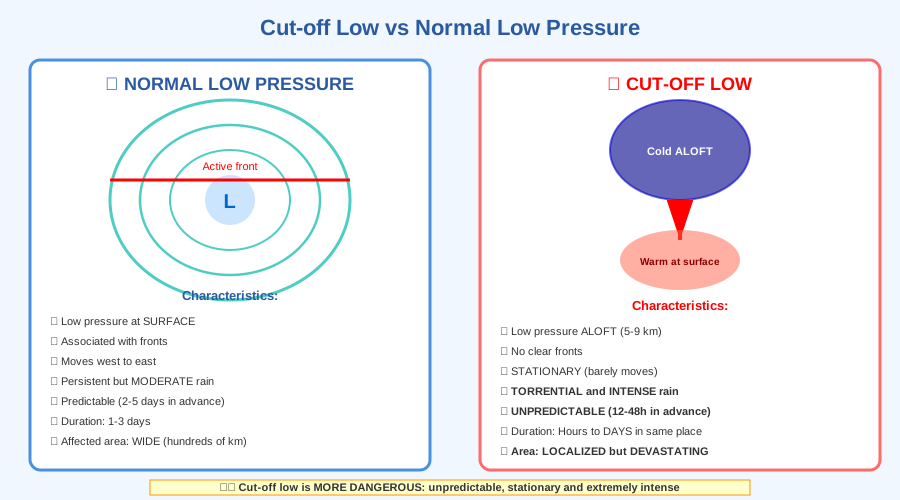
- Stationary: A normal low crosses the peninsula in 1-2 days. A DANA can stay in the same place for days.
- Unpredictable: Weather models have difficulty predicting exactly WHERE the DANA will discharge most intensely.
- Extreme intensity: It can rain in 4-6 hours what normally rains in an entire year.
- No clear warning: It has no defined fronts to warn of its arrival.
Ingredients Needed for a Devastating DANA
For a DANA to be especially dangerous, these ingredients are needed:
1. Cold Air Aloft
A mass of polar or Arctic air trapped between 5-9 km altitude, with temperatures from -25°C to -40°C.
2. Warm and Humid Surface Air
Coming from the Mediterranean Sea, which acts like a "pot of boiling water" providing moisture and heat.
3. Mountains Near the Coast
When humid wind from the sea hits the mountains, it's forced to rise, cooling and condensing all its moisture as torrential rain.
4. Slow or No Movement
The longer the DANA remains over the same area, the worse. It can spend days discharging over the same spot.
Most Affected Areas of Spain
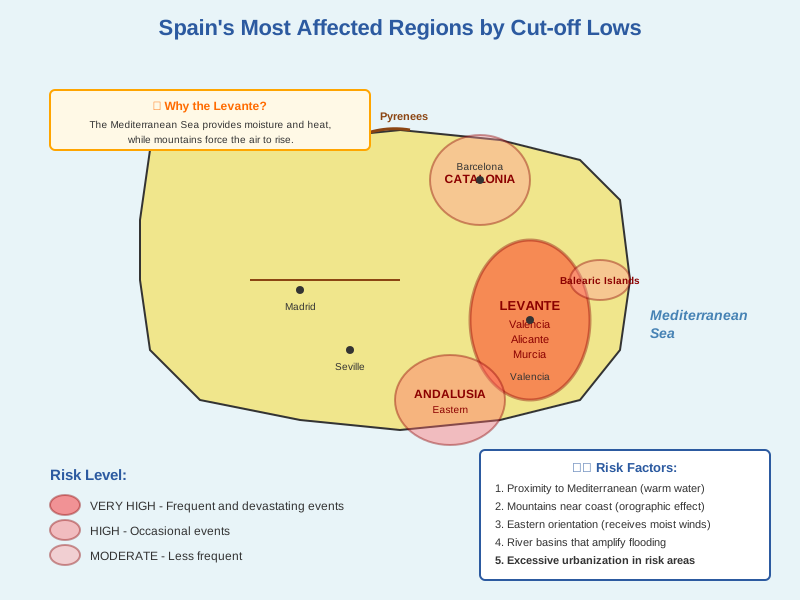
- Levante (Valencia, Alicante, Murcia): The hardest-hit zone. Perfect combination of warm Mediterranean Sea + coastal mountains.
- Eastern Andalusia (Almería, Granada, Málaga): Especially river basins flowing into the Mediterranean.
- Catalonia: The Maresme and Vallès areas are especially vulnerable.
- Balearic Islands: Mallorca and Ibiza have suffered devastating episodes.
- Other areas: Though less frequent, Aragon, Castilla-La Mancha and the interior can also be affected.
Notable Historical Episodes
Tous Dam Disaster (Valencia, 1982)
The Tous dam broke after receiving torrential rains. Over 600 liters/m² in some areas. Dozens dead and entire villages destroyed.
Biescas Floods (Huesca, 1996)
A campground was swept away by a flash flood. 87 deaths. The water came down so violently it carried tons of rocks.
Levante 2024
One of the most devastating episodes in recent history. Valencia and surrounding areas suffered catastrophic flooding with hundreds of deaths.
Signs That a DANA is Approaching
Although unpredictable, there are signs you can observe:
- 📱 AEMET warnings: Orange or red alert for torrential rain.
- 🌡️ Unusual heat: Very warm autumn days following cold air entry aloft.
- ☁️ Thunderstorm clouds: Cumulonimbus (storm clouds) growing very vertically.
- ⚡ Intense storms: Frequent lightning, deafening thunder.
- 🌧️ Sudden onset: Rain can go from zero to torrential in minutes.
- DO NOT leave home except for mandatory evacuation
- DO NOT cross flooded fords or roads (even if water seems shallow)
- Stay away from ravines, gullies and rivers
- Have an evacuation plan to high ground ready
- Follow emergency service instructions
How to Predict a DANA?
DANA prediction has improved greatly, but remains challenging:
What meteorologists CAN predict
- That a DANA is forming (3-5 days in advance)
- The general area that may be affected
- The risk period (which days)
What is DIFFICULT to predict
- The EXACT point where it will discharge most intensely
- The EXACT amount of rainfall
- The precise moment of peak intensity
Climate Change and DANAs
Scientists observe worrying changes:
- 🌡️ Warmer Mediterranean Sea: Temperature 2-3°C above historical average = more available energy.
- 💧 More moisture in the air: For each degree of warming, air can hold 7% more moisture.
- ⚡ More intense events: Though not necessarily more frequent, when they occur they're MORE violent.
- 🗓️ Out of season: DANAs that previously only occurred in September-October now also happen in summer.
Conclusion
DANAs are complex, unpredictable and potentially devastating phenomena. The combination of cold air aloft with warm, humid air at the surface, especially near the Mediterranean, creates perfect conditions for torrential rainfall.
The key is prevention and respecting weather warnings. When AEMET issues red warnings for DANA, it's not an exaggeration: it's a warning that the worst can happen.
💡 Remember: Nature is more powerful than any human infrastructure. Water flowing down a ravine during a DANA can drag cars, demolish bridges and destroy buildings. Never underestimate the power of a DANA.
Was this guide helpful? Stay informed with our updated weather forecasts.